Claudio Cicchetti
Born in Rome in 1950, Claudio Cicchetti trained at the Faculty of Architecture at the University of Genoa, where he graduated in the 1974/75 academic year with highest honors (summa cum laude). His thesis, focused on the Evolution of residential systems through industrialized intervention, anticipated the cornerstone of his career: the constant dialogue between architectural vision and industrial production. After earning his professional qualification in 1976, he embarked on an eclectic career path ranging from product design to high-level automotive styling.
His initial experience at the studio of architect E.D. Bona introduced him to the design of furniture, household appliances, and experimental vehicles, consolidating a methodology capable of blending aesthetics with function. This approach matured further during a long-standing collaboration with the Piaggio Group. There, Cicchetti managed the design of scooter components and accessories, as well as the definition of the brand’s visual identity through corporate retail standards and the design of showrooms and exhibition pavilions. His signature is also found in the motorcycle sector for historic brands such as Gilera (color and branding), Cagiva, Bianchi, Yamaha, and MBK, for whom he developed custom accessories and innovative stylistic solutions.
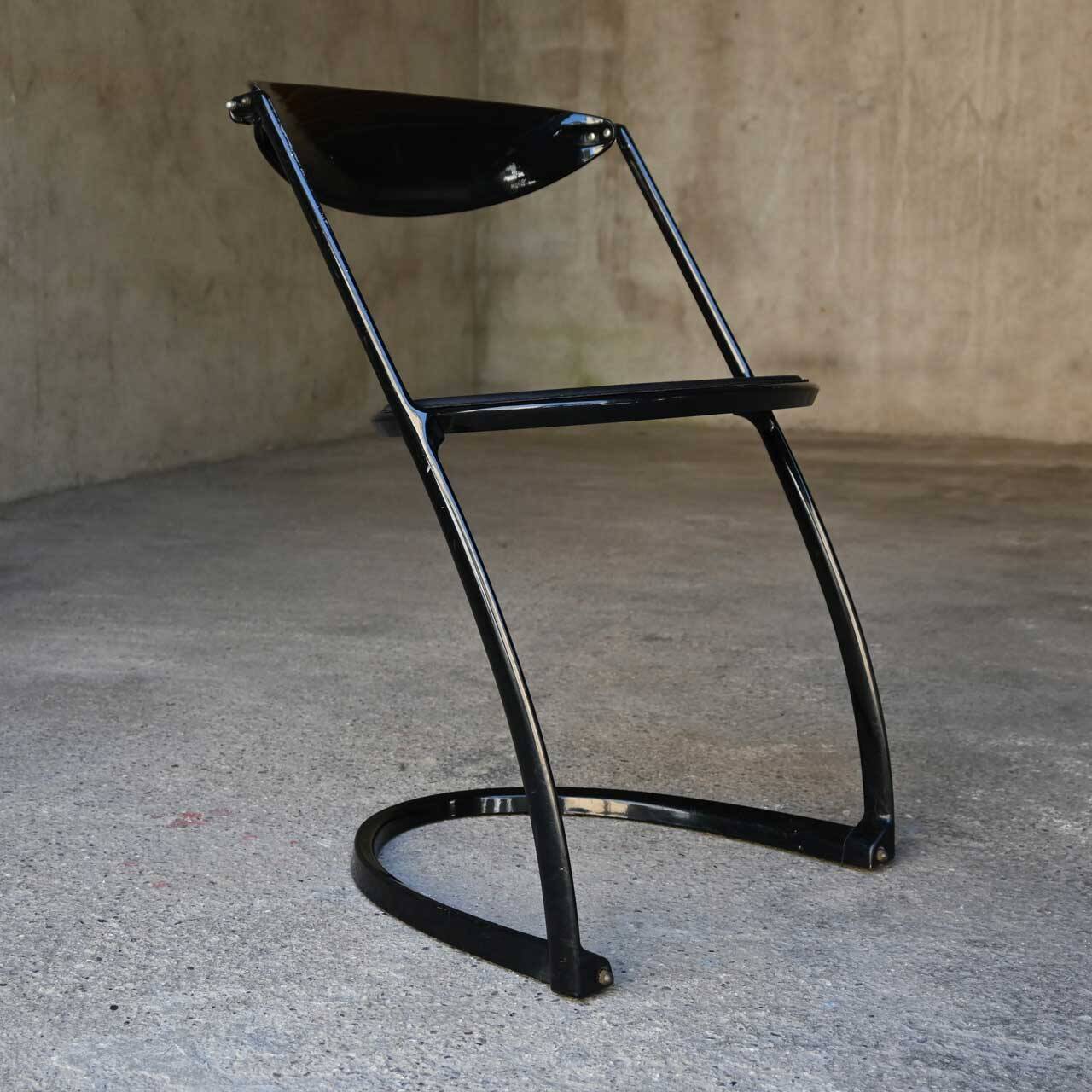
Parallel to his work in mobility, Cicchetti has left a significant mark on furniture design through his collaboration with Nemo (Cassina Group). A standout project from this period is the “ARIES” chair, an excellent design that earned him the prestigious TOP TEN ’94 award at Promosedia (Udine).
In more recent years, his activity has shifted toward the integration of design and high technology. Collaborating with Magneti Marelli (Corbetta and Venaria sites), he focused on the executive and stylistic design of instrument clusters and the Infotelematic Node (NIT), contributing to the development of satellite navigation systems and “Connect” interfaces. His expertise in technical instrumentation has been further applied to projects for Unideck and the creation of the “Peoplemeter” TVM-3 remote control for A.G.B. Tech.
Always active on the frontier of experimentation, he has maintained a constant link with the world of research, participating in scientific agreements between DIPARC and the Vehicle Study Center. He continues to explore the boundaries of industrial design as applied to contemporary technological complexity.
Claudio Cicchetti
Born in Rome in 1950, Claudio Cicchetti trained at the Faculty of Architecture at the University of Genoa, where he graduated in the 1974/75 academic year with highest honors (summa cum laude). His thesis, focused on the Evolution of residential systems through industrialized intervention, anticipated the cornerstone of his career: the constant dialogue between architectural vision and industrial production. After earning his professional qualification in 1976, he embarked on an eclectic career path ranging from product design to high-level automotive styling.
His initial experience at the studio of architect E.D. Bona introduced him to the design of furniture, household appliances, and experimental vehicles, consolidating a methodology capable of blending aesthetics with function. This approach matured further during a long-standing collaboration with the Piaggio Group. There, Cicchetti managed the design of scooter components and accessories, as well as the definition of the brand’s visual identity through corporate retail standards and the design of showrooms and exhibition pavilions. His signature is also found in the motorcycle sector for historic brands such as Gilera (color and branding), Cagiva, Bianchi, Yamaha, and MBK, for whom he developed custom accessories and innovative stylistic solutions.
Parallel to his work in mobility, Cicchetti has left a significant mark on furniture design through his collaboration with Nemo (Cassina Group). A standout project from this period is the “ARIES” chair, an excellent design that earned him the prestigious TOP TEN ’94 award at Promosedia (Udine).
In more recent years, his activity has shifted toward the integration of design and high technology. Collaborating with Magneti Marelli (Corbetta and Venaria sites), he focused on the executive and stylistic design of instrument clusters and the Infotelematic Node (NIT), contributing to the development of satellite navigation systems and “Connect” interfaces. His expertise in technical instrumentation has been further applied to projects for Unideck and the creation of the “Peoplemeter” TVM-3 remote control for A.G.B. Tech.
Always active on the frontier of experimentation, he has maintained a constant link with the world of research, participating in scientific agreements between DIPARC and the Vehicle Study Center. He continues to explore the boundaries of industrial design as applied to contemporary technological complexity.